
- News
- To see ourselves as a mirror image of Pakistan is to diminish ourselves: Ramachandra Guha
This story is from October 2, 2016
To see ourselves as a mirror image of Pakistan is to diminish ourselves: Ramachandra Guha
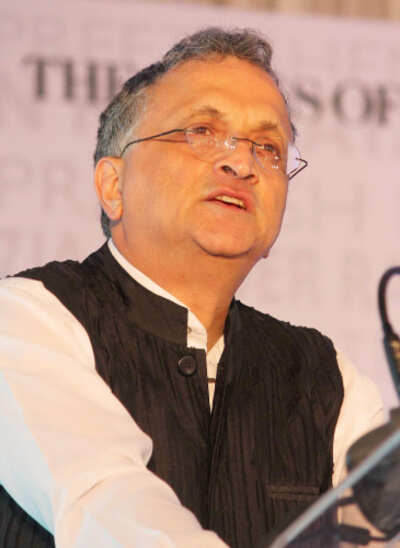
Ramachandra Guha (TOI file photo)
Edited excerpts from an interview.
You’ve dedicated this book to Bengaluru’s famous Koshy’s Parade Cafe, why?
Several reasons. It’s been my second home for so long. I’ve spent hours here, sometimes revised pieces, met friends, made friends, conducted interviews, had multiple conversations with all kinds of people. Second, and it’s true of many coffee houses in India, it provides a space for discussion. The third thing is that it happens to be almost the only thing that hasn’t changed in Bangalore. For someone who grew up in this city, who’s seen extraordinary change around him, all kinds of landmarks coming down, it gives a sense of continuity. And the fourth reason would be the graciousness and hospitality of the owners. In fact, for the Bangalore launch, I asked Prem Koshy to come and publicly presented him a copy of the book. If he’d known, he wouldn’t have come, so I didn’t tell him before (guffaws).
Your first essay deals with the decline of the Congress. Do you think the party can be revived?
No. About 18 months ago, I thought it could, but now, no, it’s impossible. It will still be there, it will win 40-50 seats, maybe some state elections but as a national force, I think it’s finished. We can’t say what may come up in 10 or 15 years. There could be a hostile takeover of the Congress. A vigorous leader like Mamata Banerjee could just come and take it over; she has more dynamism than the family but I don’t think the Congress can be a national player again. They have good leaders but the problem is to do with the current representative of the family. Sonia, Rajiv, Indira,
Jawaharlal Nehru, people in the party respected them. Now, no one respects Rahul, within the party or outside. He is an object of ridicule everywhere. With that kind of leadership, what can you do?
You write of the debates Nehru and JP had, political rivals who showed mutual respect and had sensible discussions. How did this decline into the current mudslinging?
That was a special moment in history of a nation being formed, when India produced so many thinker-activists. What is worrying is not that political debate has stopped, it is that the media, intellectuals, social media, politicians have made the debate crude and polarized. Everything is nuanced. How to deal with Pakistan is nuanced, how to solve Kashmir is nuanced, how to bring healthcare to everyone needs research and reflection, and that is missing from our debates.
In the essay on Kashmir, you’ve also pointed to Tamil Nadu and DMK and Mizoram and the Mizoram National Front, both of which agitated in the 1960s but eventually negotiated with the Centre. Are you telling rebels to read history books and learn from it?
They should. Azadi is impossible. What you can only get is deepening autonomy. You can never defeat the Indian Army, you are just condemning generations of young Kashmiris to this kind of crazy idealism and violence and they’ll just sacrifice endlessly. They have to learn. We also have to learn. Modi should distance himself from the RSS and say Article 370 is non-negotiable. Let’s find ways to operationalize it better. He should speak up about these stray attacks on beef eaters and cattle transporters. There may not be very many but each becomes a video that goes viral and whips up passions, and the ideologues of the azadi movement will say see, we are not safe in India. He has to end these attacks. We have to handle Kashmir domestically. Pakistan has lost any right to speak on Kashmir. The root of the problem is our own government’s mishandling — more under the Congress than the BJP, maybe — though Pakistan has intensified the problem. AFSPA could have been removed, the Army could have been pulled up for excesses, we have to acknowledge these issues and correct our errors.
During a visit to Pakistan, you found that many liberals harked back to a golden Mughal era. Doesn’t India also have a tendency to refer back to a golden age of Indian civilization and Hinduism? Are both countries hanging on to a glorious past and not moving forward?
This is an interesting question. The way I would put it is, this stream of harking back to the Mughals has been the dominant theme since the creation of Pakistan. In India, till recently, we didn’t do it. Now, there is the glorification of Shivaji and the Guptas. They only had Jinnah post-independence. We had so many extraordinary people, within the Congress but also outside like Periyar and Ambedkar. Now there is a tendency in India to mimic Pakistan. There is a glorification of Hinduism as a parallel to the glorification of Islam. This was not the case when I was growing up. In many ways, Hindutva is about creating a Hindu Pakistan in a political, cultural and historical sense. We choose to forget the ugly parts of Hinduism as they choose to forget the ugly parts of Islam. Hindutva is Islamist ideology in Hindu guise. It is worrying. To see ourselves as a mirror image of Pakistan is to diminish ourselves.
Gandhi, Nehru, Patel, JP, they all had a sense of shame about the ugly parts of India — caste, treatment of women, and were vocal about it. But now, pointing out anything like that is deemed unpatriotic. How did our definition of patriotism change?
It’s happened partly because the Congress is bereft of leaders and doesn’t know its history. It goes along with what’s happening and behaves like a Hindutva B Team. It’s partly because the Indian Left is not patriotic, it’s always looking outside the country for its heroes. Look at the Indian Left — and I will explore this further in future — all it’s heroes are foreigners. They’ve both ceded patriotism to the Right. I do believe that true nationalists must have a sense of shame about the crimes committed in the name of religion or state or country. Nationalism is now a matter of pride and hubris, but building a nation is a work in progress. We are not immaculate and have to keep assessing and reassessing what we’ve done and what needs to be done.
You say we’re losing our sense of humour.
(Laughs) I think only the Parsis have retained it. But if you look at Gandhi, he was constantly mocking himself. When Nehru said, ‘I am the last Englishman to rule India’, he was mocking himself, but people take it seriously now. But more than losing our sense of humour, we are losing our sense of proportion. Ramya saying Pakistan is hospitable is just an opinion, why go make a hue and cry about it… you need a sense of proportion, an idea of what is significant and what is not. We are elevating the symbolic to excessive significance and real substantive issues are not discussed in the way they should be.
Q: Do you ever feel angry when you do your research and see the detail into which the nation’s founding politicians went and the extent to which present politicians have let things slide?
I am depressed, dismayed, at the gap between politicians past and politicians present, but not angry per se.
End of Article
FOLLOW US ON SOCIAL MEDIA
Hot Picks
TOP TRENDING
Trending Stories
In Section
Entire Website
- 5 Reasons why Triple H is controlling WWE better than Vince McMahon
- Minors with mansions: Now, wealthy Indian 'kids' own foreign properties
- 7-year-old boy stripped, beaten, given electric shocks by teacher for forgetting bag in Aligarh
- Mahalakshmi murder: Man suspected of killing Bengaluru woman, chopping up body in 59 pieces found hanging in Odisha
- Is Musk dating Meloni? Tesla CEO says 'we are ... '
- 9 Brain Exercises to Help Boost Memory and Creativity in Students
- Heavy rains in Mumbai: Trains, flights disrupted; 2 killed by lightning
- 'Bangladesh has reached its limits': Yunus says repatriation of Rohingyas 'only solution'
- Top 7 Inspirational Classics Every Student Should Read
- IMD's red alert: Mumbai, Thane and Raigad brace for extremely heavy rain
- UP village pays & prays for Dalit boy fighting for missed IIT seat
- India should get permanent UNSC seat, says France's Macron
- Here’s why free airport lounge access was denied to many flyers
- Ignoring truce deal, Netanyahu orders 'full force' fight against Hezbollah
- 37 kids among 43 who drowned during 'Jivitputrika' festival: Bihar govt
- 'Expect much more ... ': Robert Vadra on PM Modi's 'dalaal, damaad' attack
- Why young people need to worry about that sneaky cholesterol
- Ranveer Allahbadia’s YouTube videos deleted: Read what the message said
- SpiceJet clears pending salaries after Rs 3,000 crore capital infusion
- Proactive heart care: How can knowledge and tools empower us?

Popular Categories
Hot on the Web
Top Trends
Trending Topics
Living and entertainment
Latest News
Why do kangaroos box and drown predators?8 Spices that can help reduce high blood sugarDiddy's Lawyer defends buying 1000 Bottles of baby oil to pass Homeland security raidsShankar to bring Chiyaan Vikram and Suriya together for a film on the Velpari novelThere’s plastic in your chai-samosa, and India is No. 1 culpritKerala lottery results: Karunya Plus KN-540 winners for 26 September 2024; first prize Rs. 80 lakhs, second prize Rs 10 lakh and third prize Rs. 1 lakhLeo, Daily Horoscope Today, September 26, 2024: Positive developments are expected in love lifeDelhi high court extends interim arrest protection for former IAS officer Puja KhedkarThe most important lesson investors can learn from trekkersChennaiyin FC eye second win on the trot in Indian Super LeagueTaliban could face Hague tribunal for their treatment of women and girls“The Chiefs get way more calls”: Rob Gronkowski says that the Chiefs gets more favorable calls than the PatriotsMaharashtra polls: Mumbai's Byculla & Versova seats are sticking points in MVA talks'Bhool Bhulaiyaa 3' new poster: Kartik Aaryan reveals 'Rooh Baba Vs Manjulika' face off‘Is this the end of my YouTube career?’:Ranveer Allahbadia 'celebrates death of BeerBiceps with death of diet''Welcome to Washington': Biden's latest blunder in New York while addressing world leaders — watch2024 Tata Punch micro-SUV new variants, features with price explainedIndia’s choking beyond Delhi: Byrnihat shows we have a big unnoticed pollution problem
Copyright © 2024 Bennett, Coleman & Co. Ltd. All rights reserved. For reprint rights: Times Syndication Service